Need help? We're here!
(888) 312-8812 Login SignupFreightliner Cascadia Brake Pad Specifications & Fitment Guide: Complete Technical Reference
FE
FinditParts Editorial Team
March 30, 2026
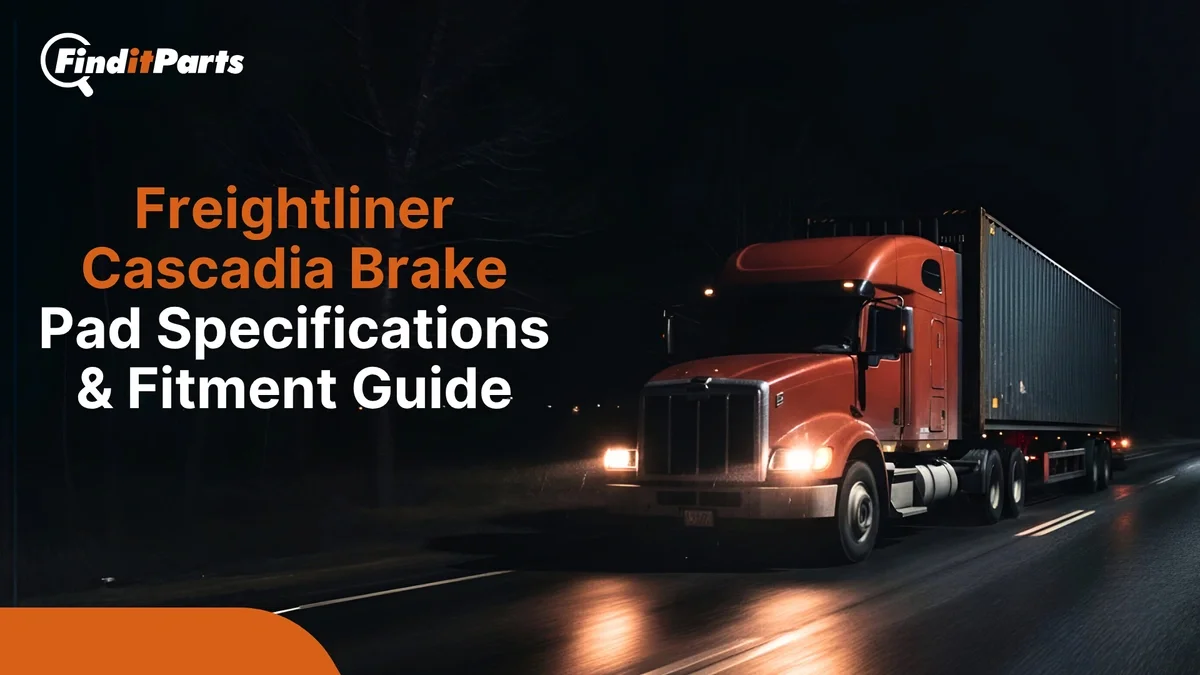
Selecting the correct brake pads for your Freightliner Cascadia requires more than just knowing your truck's year and model. You need exact specifications, OEM part numbers, compatibility information, and an understanding of how different brake pad options fit your specific Cascadia configuration. This comprehensive guide provides the technical specifications and fitment information that mechanics, fleet managers, and owner operators need to source the right brake pads the first time.
Understanding Freightliner Cascadia Brake Systems
The Freightliner Cascadia uses Meritor air disc brakes with positive pad retraction technology. This advanced braking system is engineered for heavy-duty commercial trucking, delivering reliable stopping power under demanding conditions. Understanding the components of your Cascadia's brake system is the first step toward selecting compatible replacement parts.
Modern Cascadia models (2008-2024) use a standardized brake architecture, but specific configurations vary by model year, axle type, and optional equipment. The brake system consists of several integrated components: the air brake chamber, brake calipers, brake rotors, brake pads, and the air compressor system. Each component must work in harmony, which is why using OEM-specified parts or certified aftermarket equivalents is critical for safety and performance.
Aftermarket Equivalents & Cross-Reference
Many quality aftermarket manufacturers produce brake pads that meet or exceed OEM specifications for the Cascadia. When selecting aftermarket brake pads, verify that the manufacturer's specifications match the OEM dimensions exactly. Pad height and thickness must be within 0.5 mm of the OEM specification to ensure proper fit and braking performance.
Meritor Air Disc Brake System Compatibility
The Freightliner Cascadia uses Meritor air disc brakes exclusively. Understanding the Meritor system is essential for selecting compatible components. Meritor air disc brakes consist of several integrated components that must work together seamlessly.
Meritor Brake System Components:
-
Brake Caliper: Houses the brake pads and applies clamping force to the rotor
-
Brake Rotor: The rotating disc that the pads clamp against to create friction
-
Brake Pads: The friction material that contacts the rotor
-
Air Brake Chamber: Converts compressed air into mechanical force
-
Slack Adjuster: Maintains proper brake pad clearance as pads wear
The brake pads are the wear item that requires periodic replacement. Meritor-equipped Cascadias use a specific pad design that fits Meritor calipers exclusively. Using pads designed for other brake systems (such as Bendix) will result in improper fit and potential brake failure.
Brake Pad Wear Specifications & Replacement Intervals
Understanding when to replace brake pads is crucial for safety and cost management. The Freightliner Cascadia uses a wear indicator system that alerts drivers when pads approach the replacement threshold.
Wear Indicator Specifications:
-
Minimum Pad Thickness: 6.35 mm (0.25 inches)
-
Wear Indicator Activation: Typically occurs at 7-8 mm remaining thickness
-
Replacement Interval: Every 50,000-100,000 miles (varies by driving conditions)
Brake pads should be replaced when they reach the minimum thickness specification or when the wear indicator activates. Continuing to operate with worn brake pads increases stopping distance, reduces braking performance, and can damage the rotor, leading to more expensive repairs.
Rotor Specifications & Compatibility
When replacing brake pads, it's important to understand rotor specifications, as rotor condition affects pad performance and longevity.
Cascadia Brake Rotor Specifications:
-
Rotor Diameter: 370 mm (14.6 inches)
-
Rotor Thickness (New): 45 mm
-
Minimum Rotor Thickness: 37 mm (1.10 inches)
-
Rotor Material: Cast iron with friction surface coating
Rotors should be inspected whenever brake pads are replaced. If rotor thickness is below the minimum specification or if rotors show signs of scoring, cracking, or uneven wear, they should be replaced along with the brake pads.
Installation Specifications & Torque Values
Proper installation is critical for brake system safety. Always use a calibrated torque wrench when installing brake components. Over torquing can crack caliper housings or strip threads, while under torquing can result in loose components and brake failure.
Brake Pad Material Options for Cascadia
The Cascadia can be equipped with either ceramic or semi-metallic brake pads, depending on the application and driver preference. Understanding the differences helps you select the best option for your specific operating conditions.
Ceramic Brake Pads:
-
Lower noise levels
-
Reduced dust and wheel soiling
-
Longer lifespan in stop-and-go traffic
-
Better for highway and mixed driving
-
Slightly higher cost
-
Lower rotor wear
Semi-Metallic Brake Pads:
-
Superior fade resistance at extreme temperatures
-
Better stopping power in heavy-duty applications
-
Suitable for heavy hauling and mountain driving
-
Lower initial cost
-
Higher noise levels
-
Increased dust and rotor wear
Brake System Inspection Checklist
Before installing new brake pads, perform a complete brake system inspection to identify any other issues that may affect pad performance.
Pre-Installation Inspection:
-
Check rotor thickness and condition (replace if below minimum thickness or damaged)
-
Inspect caliper pistons for corrosion or damage
-
Verify air brake chamber operation and air pressure
-
Check brake hoses for leaks, cracks, or deterioration
-
Inspect slack adjuster for proper operation
-
Verify brake fluid levels (if applicable to your system)
-
Test brake pedal feel and responsiveness
Any issues identified during inspection should be addressed before installing new brake pads. Proceeding with installation while other brake system components are compromised can result in poor braking performance and safety hazards.
Sourcing OEM & Aftermarket Brake Pads
When sourcing brake pads for your Cascadia, you have several options, each with distinct advantages.
OEM Brake Pads: Freightliner-branded brake pads are manufactured to exact OEM specifications and are guaranteed to fit and perform correctly. OEM pads typically cost 15-25% more than quality aftermarket alternatives but offer the assurance of exact fitment.
Certified Aftermarket Pads: Brands like Centric, Dynamic Friction, and Haldex manufacture brake pads that meet or exceed OEM specifications. These pads are DOT-certified and often come with manufacturer warranties. They typically cost 20-30% less than OEM pads while maintaining comparable quality.
Budget Aftermarket Pads: Lower-cost aftermarket options are available but may not meet OEM specifications exactly. These pads carry higher risk of fitment issues and may have shorter lifespans. They should only be considered if budget is the primary concern and the truck is not used for critical operations.
For fleet operations and professional mechanics, certified aftermarket pads from established manufacturers offer the best balance of cost and reliability. For owner
operators prioritizing absolute assurance of fitment, OEM pads are the safest choice.
Brake Pad Replacement Best Practices
Following these best practices ensures safe, effective brake pad replacement on your Cascadia.
Before Replacement: Drain the air brake system to zero pressure by opening the primary and secondary tank drains. This prevents accidental brake activation during work and ensures worker safety.
During Replacement: Use a calibrated torque wrench for all fasteners. Never use impact tools on brake components, as this can damage caliper housings or strip threads. Always replace brake pads in complete sets (both pads for one wheel end) to ensure balanced braking.
After Replacement: Test the brakes thoroughly before returning the truck to service. Apply and release the brakes multiple times to ensure smooth operation. Check for leaks using soapy water and verify that the brake holds the wheel from turning when the parking brake is engaged.
Conclusion
Selecting the correct brake pads for your Freightliner Cascadia requires attention to specifications, part numbers, and compatibility information. The specifications provided in this guide ensure that you source the correct parts the first time, avoiding costly fitment issues and brake system problems. Whether you choose OEM or certified aftermarket brake pads, always verify that part numbers match the specifications in this guide and that installation is performed by qualified technicians using proper torque specifications.
For additional brake system information or to source OEM and aftermarket brake pads for your Cascadia, visit Finditparts.com or call (888) 312-8812 to speak with a parts specialist.
Connect With Us