Need help? We're here!
(888) 312-8812 Login SignupACDELCO TCK337 tck337


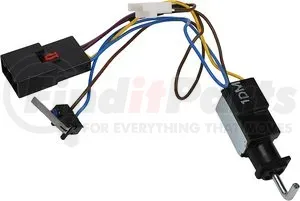
Out of Stock
We cannot fulfill orders for this part at this time. Please check back later or request a stock notification to receive an email.
We may have similar parts for sale. Search Alternatives >
ACDELCO TCK337 Part Description
ACDELCO TCK337 Specifications
Product Attributes
| Signs of Wear & Troubleshooting - Section 1 - Bullet 4 | Abrasion: wear along the side could indicate misalignment due to a failed tensioner. |
| Product Description | ACDelco Professional, premium aftermarket Timing Belts are composed of high grade Hydrogenated Nitrile Butadiene Rubber (HNBR) for superior heat and contamination resistance and are equipped with premium high strength tensile members. They are GM OE equivalent or better in service life and performance and provide the most extensive coverage in the industry for import or domestic. These premium aftermarket replacement timing belts are manufactured to meet your expectations for fit, form, and function. ⚠<b> WARNING:</b> Cancer and Reproductive Harm - www.P65Warnings.ca.gov |
| FAQ - Question 3 | Are there steps I can take to ensure a longer automotive belt life? |
| FAQ - Question 5 | Can I use the same automotive belt for multiple uses? |
| Good Maintenance Practices - Section 1 - Bullet 6 | Check for proper belt tension after 500 to 1,000 miles following belt installation. Recheck often, at least twice a year or every 6,000 miles. |
| FAQ - Question 1 | Could an automotive belt tear during use? |
| Signs of Wear & Troubleshooting - Section 1 - Bullet 5 | Cracking: older neoprene belts crack as they near the end of their life cycle and often need to be replaced. |
| Good Maintenance Practices - Section 1 - Bullet 1 | Do not use belt dressings to stop belt slippage or noise. These are oil based and may cause belt deterioration. |
| Signs of Wear & Troubleshooting - Section 1 - Bullet 6 | Engine stops or backfires. |
| Features & Benefits - Bullet 5 | Equipped with PTFE infused jackets to reduce frictional losses and tooth shear |
| Signs of Wear & Troubleshooting - Section 1 - Bullet 2 | Glazing: shiny spots can indicate a slipping belt that isn't properly transferring power to accessories. |
| Features & Benefits - Bullet 1 | Has aramid reinforced nylon jackets and back side jackets for longer wear |
| Features & Benefits - Bullet 3 | Has premium high strength tensile members for high durability |
| Signs of Wear & Troubleshooting - Section 1 - Bullet 8 | Headlights dim while driving. |
| FAQ - Question 4 | Is there a way to repair a torn automotive belt? |
| Signs of Wear & Troubleshooting - Section 1 - Bullet 9 | Loss of battery charge. |
| Features & Benefits - Bullet 2 | Made with high grade HNBR rubber for superior heat and contamination resistance |
| Good Maintenance Practices - Section 1 - Bullet 2 | Never twist a belt more than 90 degrees during inspection. This may damage the tensile cords and cause premature failure. |
| Programming Required | No |
| FAQ - Answer 6 | No, remember the leading cause of belt failure is improper tension and misaligned pulleys. Improper tension will cause the belt to slip and you may notice a loss of performance from the air conditioning system as well as increased heat under the hood. High heat can lead to premature accessory failure. |
| FAQ - Answer 5 | No, use the belt in the way it's listed in the ACDelco belts and hoses catalog. |
| FAQ - Answer 4 | No, when the belt backing has been torn or cracked, the belt should be replaced. |
| Signs of Wear & Troubleshooting - Section 1 - Bullet 3 | Pilling: worn rubber can fill in grooves and cause noise, heat, vibration, and excessive wear. |
| Features & Benefits - Bullet 4 | Provides the most extensive coverage in the industry for import or domestic |
| Good Maintenance Practices - Section 1 - Bullet 3 | Replace serpentine belts every 60,000 - 100,000 miles. Check vehicle's owner's manual. |
| Good Maintenance Practices - Section 1 - Bullet 4 | Replace V-belts after 3 to 4 years, or every 36,000 to 48,000 miles. |
| Signs of Wear & Troubleshooting - Section 1 - Bullet 1 | Rubber Loss: (most common belt wear) a belt wear gauge measures rubber loss, which can result in reduced power transfer from the crank to the accessories. |
| Signs of Wear & Troubleshooting - Section 1 - Bullet 7 | The belt is producing a squealing noise. |
| Good Maintenance Practices - Section 1 - Bullet 5 | Use an approved tension gauge to check belt tension. |
| FAQ - Question 6 | Will a worn automotive belt affect gas mileage? |
| FAQ - Question 2 | Will I know immediately if an automotive belt tears? |
| FAQ - Answer 3 | Yes, the leading causes of belt failure are improper tension and misaligned pulleys. Both these conditions cause excessive heat which leads to belt failure. Have your belts checked every 3,000 miles for belt wear, proper tension, and pulley alignment. |
| FAQ - Answer 1 | Yes, this may be indicative of an alignment issue or a failed tensioner. |
| FAQ - Answer 2 | Yes, you may lose your power steering or stall out. Your car is not drivable when your drive belt fails. |
Additional Information
| Warranty Special | Limited Lifetime Warranty (Parts Only). Please see ACDelco.com for more details|Limited Lifetime Warranty as long as the original purchaser still owns the vehicle (Parts Only). Please see ACDelcocanada.com for more details |
| Harmonized Tariff Code (HTS) | 8409999190 |
| Country of Origin (Primary) | JP |
| Warranty Special UOM | TX |
| UPC | 00808709449645 |
ACDELCO TCK337 Cross References
| Brand | Part Number |
|---|---|
| GATES | TCK337 |
ACDELCO TCK337 Fits Vehicles
- Kia Optima (2006-2009)
- Kia Magentis (2007-2010)
- Kia Rondo (2007-2012)
- Hyundai Santa Fe (2007-2009)
ACDELCO TCK337 Customer Reviews
No reviews yet
Be the first to review this product!
ACDELCO TCK337 Manufacturer Information
A true OEM auto parts brand for GM and non-GM vehicles, ACDelco® offers a wide portfolio of parts designed to keep vehicles on the road longer. These parts work precisely and fit perfectly because they are designed, engineered, tested, and backed by General Motors. But ACDelco also carries aftermarket components that go through the same 18-step quality approval process as the OE parts. Whether customers choose OE or aftermarket, they’d get the same reliable performance, precise engineering, and superior reliability for years to come. ACDelco’s expansive product portfolio includes alternators, filters, batteries, brakes, belts and hoses, oil and fluids, and suspension parts. These products are made to meet GM and non-GM vehicles’ ever-evolving powertrain, collision, maintenance, and repair needs.
ACDELCO TCK337 Questions & Answers
No questions yet
Be the first to ask a question about this product!
 California residents see
Related Searches
engine parts
valve train components parts
engine timing belt
engine timing belt kit with water pump
engine timing belt tensioner
engine timing belt tensioner bearing
engine timing belt tensioner actuator
engine timing chain
engine timing chain guide
kia engine timing belt component
hyundai engine timing belt component