Need help? We're here!
(888) 312-8812 Login SignupSURVEY: Nearly Half of Americans Would Trade Their Job for a Career in Trucking
FE
FinditParts Editorial Team
February 13, 2025

It's no secret that the trucking industry is essential to the U.S. economy, so why do so few Americans consider truck driving as a career choice? To find out how people really feel about getting behind the wheel of a semi, we surveyed over 1,000 adults to learn what it would take to make them become a truck driver, what they think the most significant downsides of trucking are, and whether they believe it's still a viable career choice for young people today.
Key Takeaways:
- Roughly 45% of Americans have considered becoming a truck driver.
- Nearly one in two Americans would quit their job to drive a truck if it paid more than they currently earn.
- Americans think time away from home is the biggest downside to trucking.
- Nearly a quarter of Americans say they wouldn't become a truck driver no matter how much it paid.
- 62% of Americans believe truck drivers are paid too little for their work.
Nearly Half of Americans Say They’d Become a Truck Driver if It Paid More Than Their Current Job
Despite concerns about work-life balance for truckers, 46% of people admit they'd leave their current job to become a truck driver if it paid more than they currently earn. While that number would be different for everybody, 32% of respondents say they'd consider a career in trucking if it paid $100,000 or more a year.
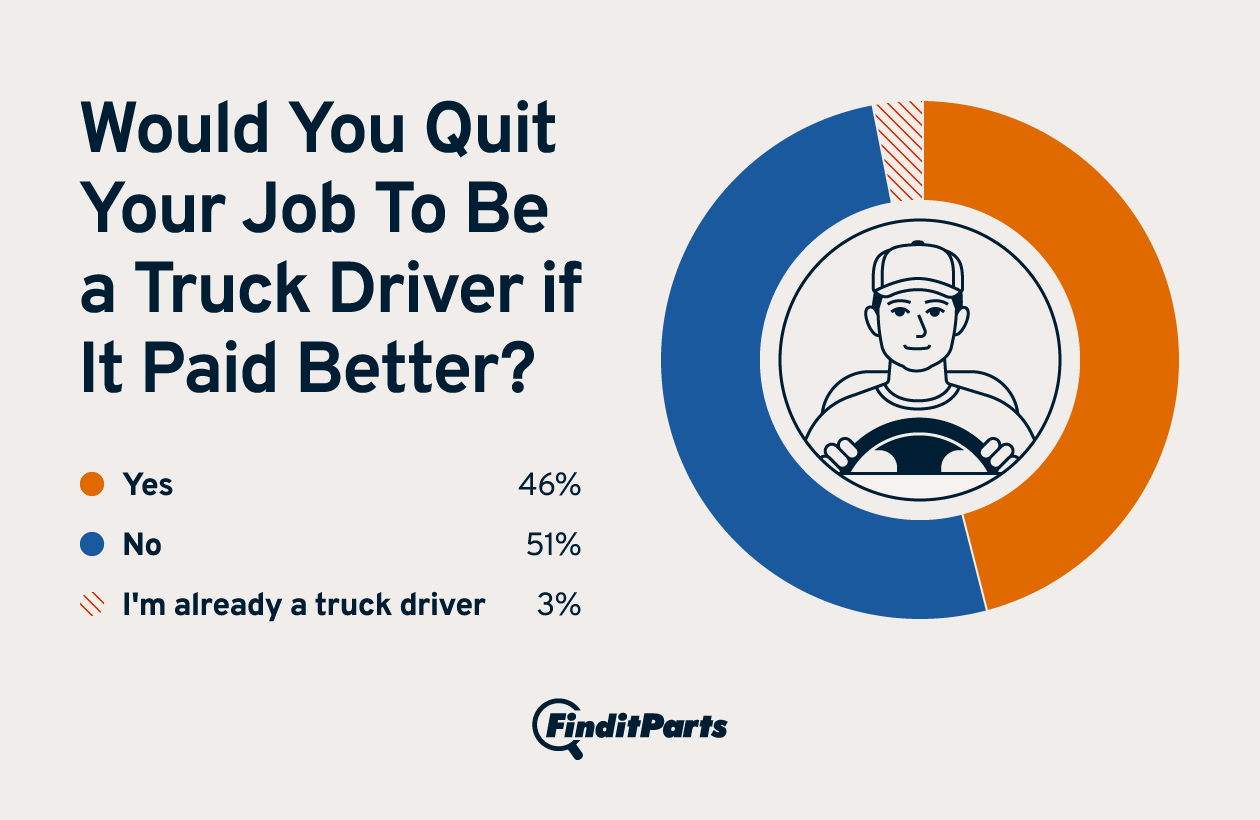
This squares with our finding that 31% of Americans say the most important factors for whether they'd drive a semi-truck are pay and earning potential, compared to only 18% who say flexibility of schedule. But even if money is a strong incentive for most, nearly a quarter of Americans say they wouldn't become a truck driver no matter what salary they were offered.
Truck driver salaries can vary wildly depending on the city and state you operate out of, with averages ranging from $65,000 per year in Alaska to $48,000 per year in West Virginia. To earn $100,000 or more annually, you'd likely need to own and operate your own trucking business, which offers a median salary of over $180,000.
Realistically, even truckers with six-figure salaries have significantly lower take-home pay due to expenses like gas and maintenance, so new drivers hoping to bring in $100,000 a year may need to lower their expectations.
44% of Americans Have Considered Driving a Semi-Truck for a Living
Although truck drivers make up only around 2% of the U.S. workforce, a whopping 44% of Americans say they've considered driving a semi-truck as a career. While this may not accurately reflect the reality of a nation in the midst of a truck driver shortage, it does indicate that a significant number of people have at least considered getting behind the wheel of a semi-truck.
Overall, men (53%) are more likely to have considered a career in trucking than women (35%), but this is a surprisingly small difference, considering that only 6% of all truck drivers in the U.S. are female.
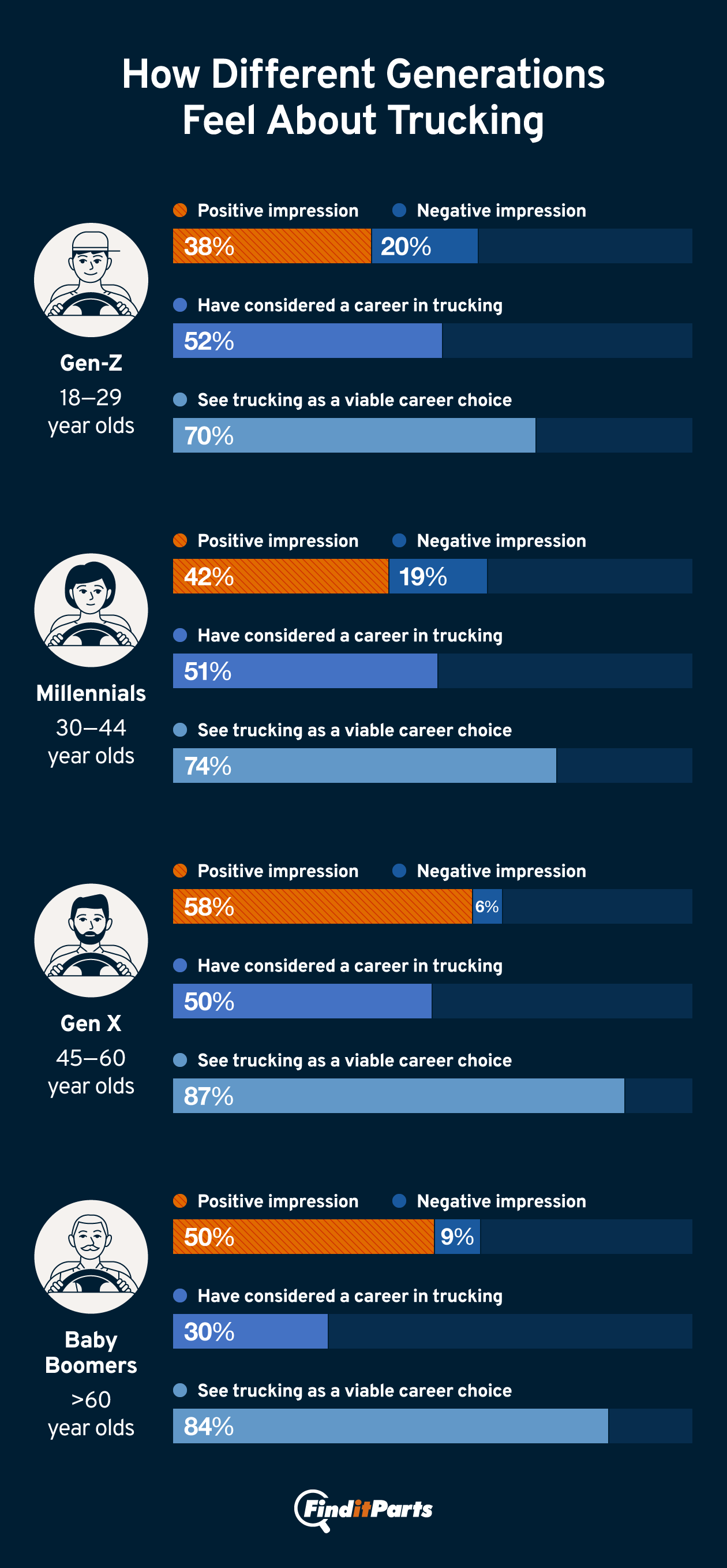
Among age groups, Gen Zers (52%) are most likely to say they've thought about driving a semi-truck for a living, although millennials (50%) and Gen Xers (50%) aren't far behind. On the other hand, baby boomers are 20% less likely to say they've considered becoming a truck driver than every other age group.
Americans Are Concerned Truckers Spend Too Much Time Away From Home
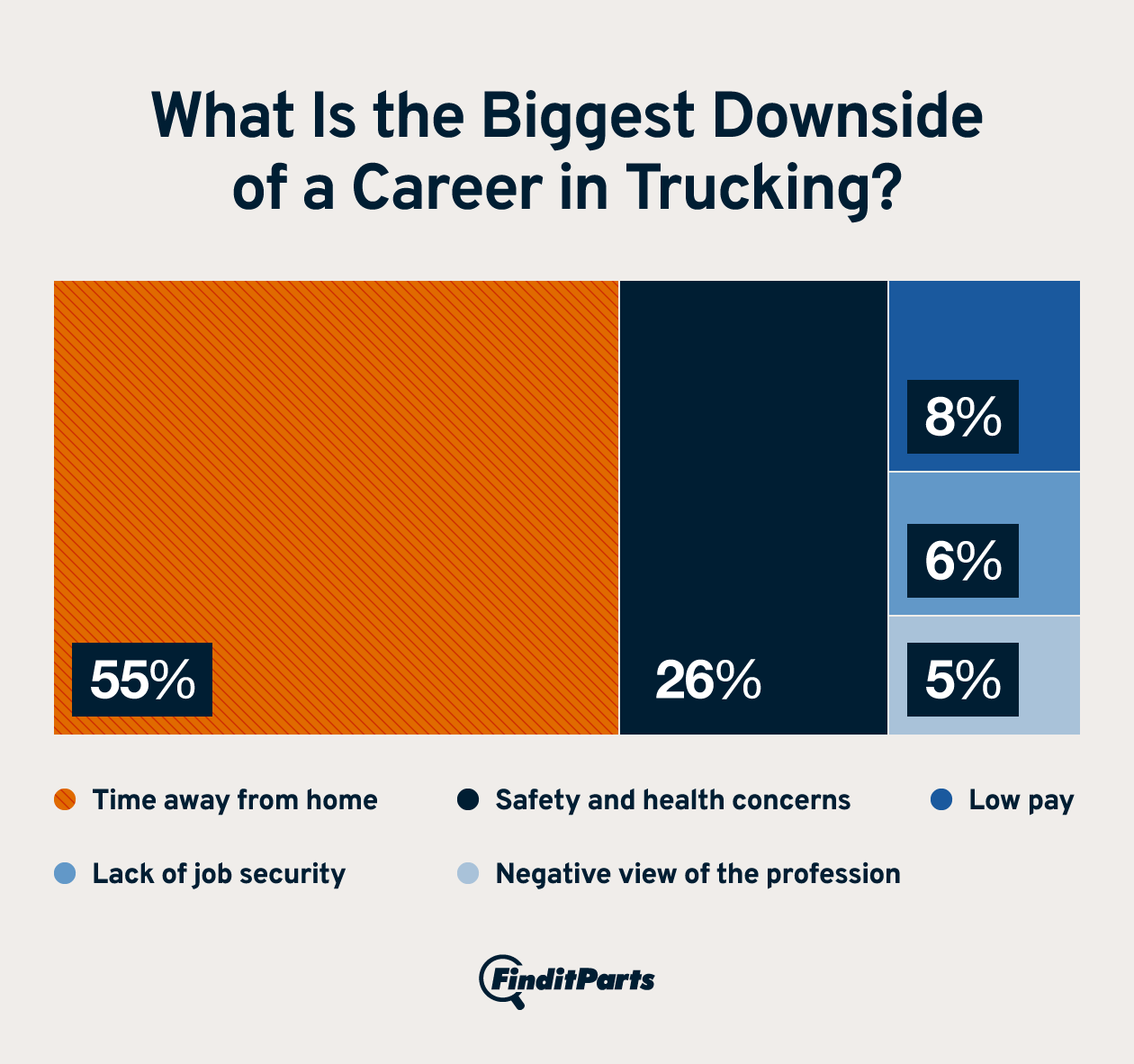
Many Americans are interested in truck driving as a career, so why do so few actually earn a commercial driver's license (CDL) and pursue a career in trucking? Put simply, most people think that truck drivers spend too much time away from home.
Our survey found that more than 50% of Americans believe excessive time away from home is the biggest downside to hauling freight for a living. In comparison, only 26% of respondents selected safety and health concerns as the biggest downsides, while less than 10% selected low pay, job security, or negative views of the profession.
These findings suggest that most Americans associate trucking with long hours and poor work-life balance. And they're not wrong—long-haul truckers can spend two or more weeks at a time away from home, which means sleeping at truck stops and rest areas instead of their beds. This helps explain why Americans are more than twice as likely to say they'd consider local trucking roles with standard hours than long-haul trucking. It is also one of the factors to consider before starting a trucking career for those looking to enter the industry.
Most Americans Still Think Truck Driving Is a Viable Career Choice
Although not everyone wants to get behind the wheel themselves, nearly 79% of Americans believe that truck driving is a viable career choice for young people entering the workforce. However, there's a slight generational divide in how strongly this belief is held: while over 80% of Gen Xers and baby boomers view trucking as a good career option, only around 70% of Gen Zers and millennials share the same sentiment.
This gap may reflect younger generations' awareness of automation and its potential impact on the future of trucking. However, the majority of Americans from every age group still view trucking as a stable career path, suggesting that many people do not believe self-driving trucks will significantly impact job security in the freight industry.
Additionally, our survey found that nearly 85% of Americans believe truck drivers are very important to the U.S. economy. Although this number was smaller for Gen Zers (75%) and millennials (80%), the general public sees trucking as both a viable career and an economic necessity.
Younger Generations Are Less Likely To Have a Positive Impression of Trucking
A common thread in our findings is that the public views trucking as an important and valuable job, but most people aren't willing to pursue it. While pay and work-life balance play a role in this, we also found that only 47% of people have a favorable view of truck driving as a career, while the rest of the public is split between having a neutral view (40%) or a negative view (13%).
Interestingly, women are more than 10% more likely than men to have a negative impression of trucking and around 7% less likely to have a positive impression. This is likely due in part to the fact that truck driving remains a male-dominated industry.
There's a discrepancy between age groups, too, with Gen Xers (58%) being the demographic with the most positive view of freight hauling as a career. In comparison, only 38% of Gen Zers hold a positive view, suggesting a generational shift in how trucking is perceived.
One reason for this may be that people think truckers—like teachers and nurses—are underpaid and overworked, despite being critical to our nation's infrastructure. Indeed, our findings reveal that 62% of Americans believe truck drivers are paid too little for their services. With better wages and a more stable work-life balance, the job satisfaction for truckers would likely improve across the board.
6 Career Tips for Prospective Truck Drivers
If you're looking to become a truck driver, it's important to research the industry to determine which role is right for you. Here are some tips to guide you as you start your career:
- Research salary information: This may be a given, but studying truck driver salaries will give you the best idea of your earning potential based on your state or city and your desired role.
- Earn a commercial driver's license: You'll need to earn your CDL to operate any large commercial vehicle. There are different license classes for different types of vehicles, but each requires training and a skills test.
- Consider attending a driving school: This complements earning a CDL, but you can also enroll in a truck driving academy to streamline the training process.
- Build up your experience: To secure high-paying roles, it's essential to gain as much experience as possible. This could mean taking part-time local roles before moving to a long-haul carrier.
- Find the right company: Research a potential employer's reputation thoroughly before signing on. At the very least, read reviews of the company from other drivers.
- Consider specializations: Trucking specializations, such as hazmat, tanker, and flatbed, can lead to expanded job opportunities and increased earning potential.
With the global truck driver shortage projected to double by 2028, it's more critical than ever that prospective truckers have access to resources and education about navigating the freight industry. Whether you're a veteran driver or just getting started, FinditParts has all the heavy-duty truck parts you need to be road-ready in 2025 and beyond.
Connect With Us

Related Articles

How You Can Be Prepared For Brake Safety Week: A Simple Guide
April 01, 2026
Freightliner Cascadia Brake Pad Specifications & Fitment Guide: Complete Technical Reference
March 30, 2026
Freightliner Cascadia 2012-2019 Brake Maintenance Schedule & Inspection Guide: Keep Your Brakes Safe and Reliable
March 19, 2026