Need help? We're here!
(888) 312-8812 Login SignupWhy Big Rig Parts Switch More Often in the Cold
FE
FinditParts Editorial Team
December 02, 2025
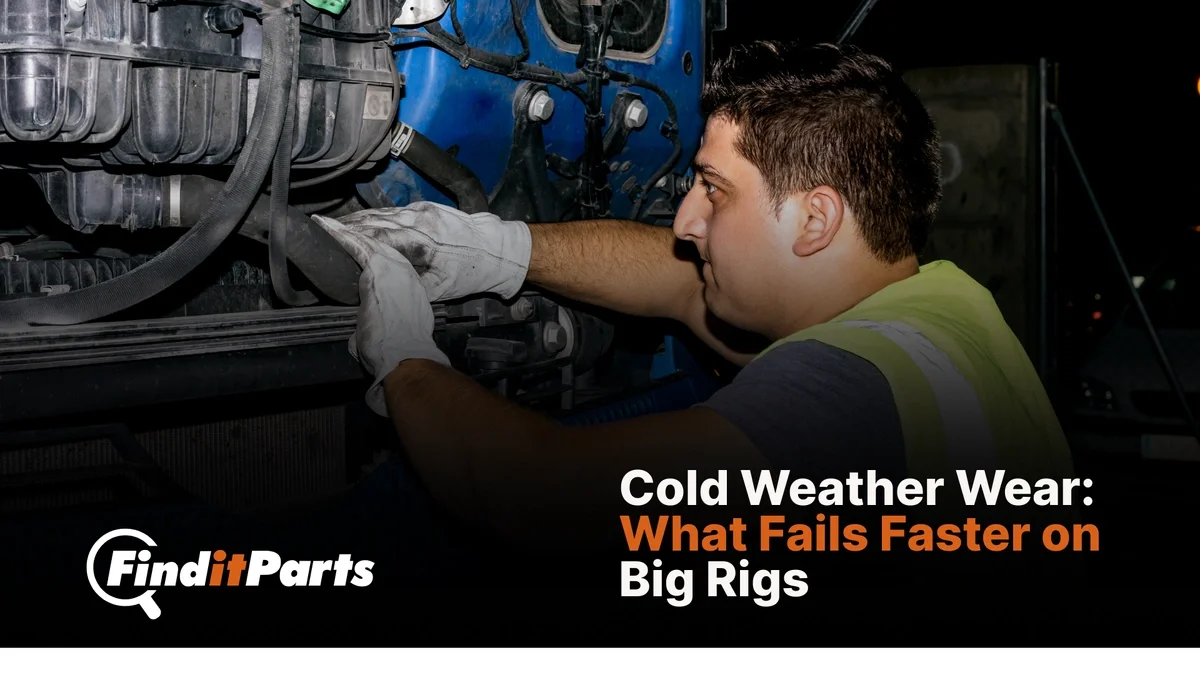
When winter hits full force, big rigs feel it every mile. Drivers can manage slippery roads and frozen mirrors, but the parts underneath the cab take the worst of it. Cold air snags on every weakness. Seals go brittle, batteries drag, and what doesn’t crack outright starts grinding harder than usual. That’s why parts fail more often when temps keep dropping.
This isn't about minor annoyances. It’s about the brake chamber that locks up after three days of sleet, the fuel system that spits during a morning start, or the one valve that doesn’t cooperate in minus-degree weather. For parts managers and crew leads, knowing why big rig parts wear out faster in the cold is the first step toward cutting downtime and keeping trucks on schedule.
Winter hits hard, and if you’re not ahead of it, your rig might be stuck behind it.
How Cold Impacts Wear Patterns
Cold doesn’t just make crews move slower. It changes how big rig parts behave altogether. Rubber parts like gaskets and seals lose flexibility, turning stiff and breakable. Plastics go brittle. Components that flex and move during normal operation can start to snap or leak under pressure.
There’s also contraction. Metal parts shrink in cold temps, and that shift may not seem obvious until you’ve got a loose bolt or a bracket that won’t line up right. Over time, these tiny shifts can push systems out of alignment and open up weak spots that usually hold together just fine.
Things grind more in the cold too. When grease thickens and shocks don't compress the way they should, every mile of pavement hits harder. That extra friction presses into bushings, control arms, and suspension hardware, especially when the truck’s loaded and running long shifts in low temps.
Common Big Rig Parts That Fail in Cold Weather
Every seasoned tech knows what parts to keep a closer eye on during the colder months. Some don’t survive the dip in temperature without problems showing up.
-
Brake chambers and spring brakes can freeze internally. Moisture trapped inside the system creates ice, and suddenly you’re dragging a trailer that won’t release on demand. One overlooked chamber and you’re spending a night parked instead of moving freight.
-
Electrical connectors and batteries fail more often. Contacts corrode faster where salt, slush, and vibration meet. Starter batteries lose effectiveness when it's cold, especially if they’ve been hanging on through the back half of the year.
-
Air dryers, pressure valves, and air dryer cartridges can get clogged when moisture doesn’t purge clean. Systems that rely on airflow or vacuum pressure slow down or seize entirely if ice builds up in the wrong line.
-
Fuel lines and DEF systems are common points of trouble. DEF tanks and filters freeze and sensors stop communicating. Fuel gels instead of flows unless proper additives or heaters are in place. Even if the engine doesn’t throw a code, the truck may underperform just when it needs the power.
Some of these problems sneak in between checks. Others happen fast when the morning shift starts. Either way, they’re more than seasonal quirks. They’re real risks that can shut down a truck when no one's got time for a delay.
Fleet Behavior and Parts Replacement Schedules
Your parts schedule doesn’t just follow mileage anymore. It follows the temperature too. When cold weather shows up, even parts that passed a summer inspection can give out quickly on the next run.
Fleets running in cold regions often build in earlier replacement windows. That might mean swapping out air dryer cartridges before they’re technically due, rotating in new spring brakes before the old ones are totally worn, or checking heater elements in fuel and DEF systems before any alerts pop up.
That shift in behavior is just practical. Parts fail faster in freezing weather, and downtime leaves more damage when deliveries go behind. Some operations go with winter-duty versions of specific parts, especially if the route runs through areas with consistent sub-freezing temps.
Down south or in areas that don’t get snow? There’s still a case for modified schedules. Morning chill, humidity swings, and long idle time in cooler air all factor into how truck parts work day to day. You don’t have to be buried in snow to feel the impact.
How to Choose the Right Part for the Conditions
Choosing replacement parts during winter gets easier when you’re thinking ahead. Matching the right spec isn’t just about fit and thread—it’s about performance under pressure. And when it’s below freezing, every spec matters more.
Say you’re replacing a spring brake. You don’t just look at size and mount position. You look for corrosion protection, cold-tested diaphragm materials, or a unit that handles icy purge events better than most.
Shopping by system helps too. If batteries have dragged slow on morning starts, pairing them with reliable air dryers can protect airflow and maintain charge without tripping system faults.
Cross-referencing by VIN or using spec-match tools saves time and trouble. It helps avoid ordering a warmer-weather part that will call it quits two weeks into a cold run. Few things are worse than getting the replacement fast... only to find out it wasn’t built for the kind of cold your truck’s about to hit.
Stay Ready, Stay Moving
Winter doesn’t give trucks a break. Shorter days and longer hauls mean every system is pushed harder, and failure points multiply before crews can catch up. Big rig parts swap faster for a reason—cold air tests every inch of the build.
You can’t predict every failure. But you can prepare better than last year. With the right parts schedule, smarter replacements, and some seasonal awareness, trucks stay moving longer and spend less time stuck in a bay the day before a major job. Cold weather will always press on rigs. Being ready just means it doesn’t have to stop yours from running.
If cold weather is already wearing down your gear, now’s the time to swap in replacements built to handle more miles and fewer breakdowns. At FinditParts Inc., we keep a steady inventory of trusted brands and big rig parts so you can stay stocked, not sidelined.
Connect With Us