Need help? We're here!
(888) 312-8812 Login SignupHow to Prep Heavy Duty Trailer Parts for Hard Weather
FE
FinditParts Editorial Team
November 19, 2025
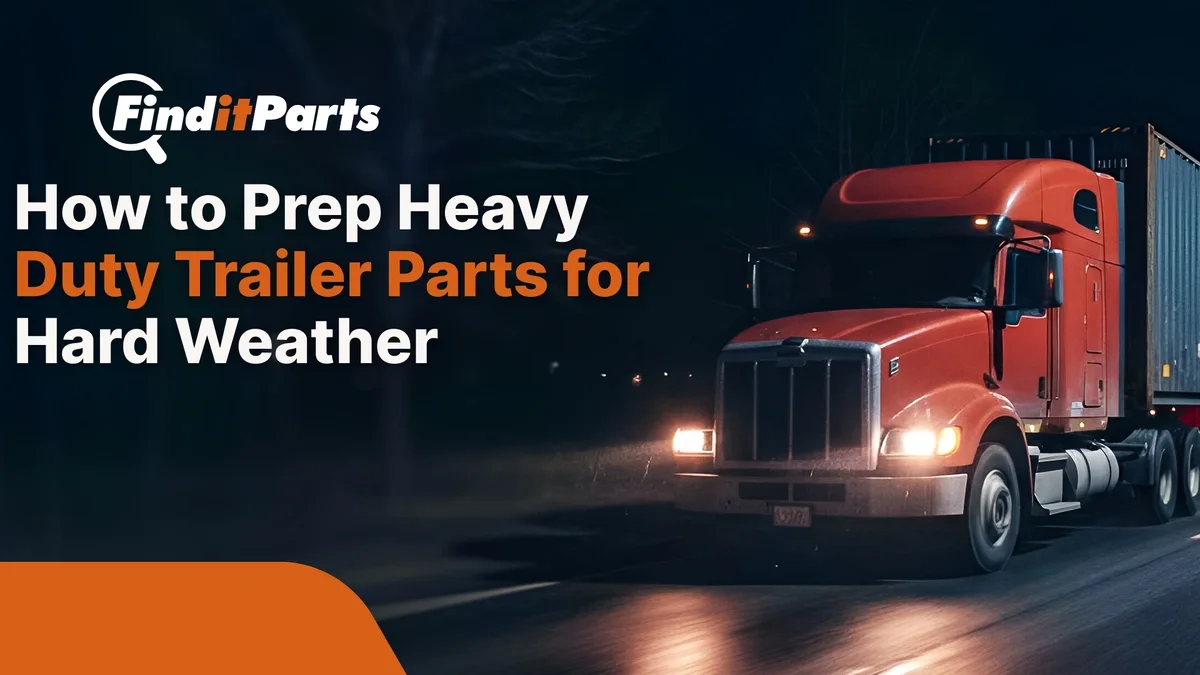
December isn’t the time to play catch-up. If you're operating trailers through cold snaps, frozen joints, and salt-covered highways, you know what we're talking about. Frozen valves, locked drums, and cracked air brake gladhands don’t wait for a scheduled stop. The best way to stay ahead is to get heavy duty trailer parts checked, stocked, and secured before winter swings wide.
Smart prep now means fewer calls from stranded drivers and less scrambling on back-order parts. Let’s walk through what matters most—and how to keep trailers rolling when the temp keeps dropping.
Inspect and Replace Cold-Sensitive Components
The cold doesn’t just stiffen fingers—it wrecks plastic and rubber parts, kills seals, and turns mild wear into big breaks. Start with the trailer’s braking system. Look for cracking around air hoses, stiff or damaged gladhands, and fatigue in the valves.
Hit the weak links first. That means replacing old air brake valves, checking ABS module wiring for corrosion, and making sure spring brakes still hold pressure without leaks. If the trailer’s been sitting, rotors and drums can rust up fast.
Air dryer cartridges should also be checked. A clogged or spent cartridge can push moisture into the lines—where it freezes, expands, and causes more problems down the line. If it’s not fresh, swap it.
Protect Your Electrical Connections and Lighting
Cold, wet, and road salt. That's a triple threat for trailer lighting and wiring. Even one cracked seal in a plug end or harness can turn into a dead short by mid-January.
Start with sealed plugs and junction boxes. Look for signs of moisture or grime. If the connection is soft or smells burnt, it’s got water damage inside. Change it before it gets worse.
Marker lights and tail lights take more abuse than most think. If a lens is cracked, water’s already in. Replace those lights with cold-weather-rated LED trailer lights. They're more resistant to vibration and double-sealed against water. Always check that your harness clips are tight and that the wiring insulation hasn’t split.
Stay Ahead on Undercarriage and Suspension Wear
Most drivers feel a potholed road before they see it. That damage ends up under the trailer—hidden until it’s too late. Winter makes it worse. Ice, salt, and constant slam points break down suspension parts fast.
Take a close look at equalizers, leaf springs, and torque arms. If there’s play, movement, or uneven gaps, it’s time to act. Rubber bushings that flex fine in summer can go brittle in sub-zero weather and crumble under weight.
Shock mounts, hangers, and even axle seats deserve attention. A cracked spring or worn saddle may not give out right away, but the first hard bump on an icy road might change that.
Stock the Right Spares for Winter Road Runs
When the weather's fine, missing a connector or chamber might not slow things down much. But lose a gladhand during a snowstorm and that trailer’s going nowhere. Stock the basics that tend to fail more often in the cold.
That means:
-
Gladhands with durable seals
-
Extra air lines in both red and blue
-
Brake chambers and slack adjusters
-
Heater hoses with clamps
-
Light harness patch kits and sealed connectors
Keep these heavy duty trailer parts in your shop inventory and on service trucks. Having a spare when you need it beats waiting in a lot for a tow or tracking a part across three counties.
Weather-Smart Lubrication and Maintenance Routines
Cold weather messes with grease. What spins smoothly in July can seize in December. Grease points on hitches, landing gear, and suspension pivots need cold-weather compatible lube—not the same stuff used year-round.
Before deep freezes hit, re-grease key joints using winter-grade products. Heavy grease that's too thick in freezing temps can actually block movement or create dry points.
We’ve seen landing gear ice up solid when moisture gets into the threads. Greased properly, they crank like normal. Miss it, and you’re stuck with a breaker bar.
Also, check for signs that drums have frozen overnight. This happens when a trailer is parked during storms—sliders can lock in place too. Make sure to inspect if the rig’s been idle during back-to-back storms.
Ready to Roll When the Roads Get Rough
This kind of prep isn’t about major overhauls. It’s about catching the little stuff before it grows teeth. Heading off a leak, replacing a brittle part, keeping grease where it should be—these are small wins that matter big when the highway's full of slush and salt.
Checking your heavy duty trailer parts once now saves time, money, and breakdowns later. When the cold hits, fleets that prepped properly won’t be the ones stuck waiting for a thaw. They'll be moving freight while others dig out.
For shops and fleets looking to stay ahead of winter problems, FinditParts Inc. stocks a wide range of dependable parts built to handle cold, salt, and heavy wear. Whether you're restocking or replacing critical systems, our top-selling heavy duty trailer parts help keep equipment running when icy weather tries to slow you down.
Connect With Us