Need help? We're here!
(888) 312-8812 Login SignupWhen to Replace Your Truck's Air Brake Switches
FE
FinditParts Editorial Team
October 15, 2025
Introduction
When your brakes don’t respond the way you’re used to, it’s easy to point fingers at the tank, lines, or foot valve. But sometimes, it’s a small switch buried behind the dash that’s throwing everything off. Switches for air brake systems don’t get attention until something’s already gone wrong. And by that point, the wake-up call might come with a tow bill.
Late summer is prime time for brake-related headaches. Heat builds, pressure fluctuates, and any weak link tends to show itself faster during long hauls. If your brake lights start acting strange, your compressor runs longer than normal, or your warning light flickers without explanation, your air brake switch might be waving the white flag. Knowing when that tiny part needs to go—not after it fails, but before—is the kind of insight that keeps rigs out of the yard and on schedule.
What Does an Air Brake Switch Actually Do?
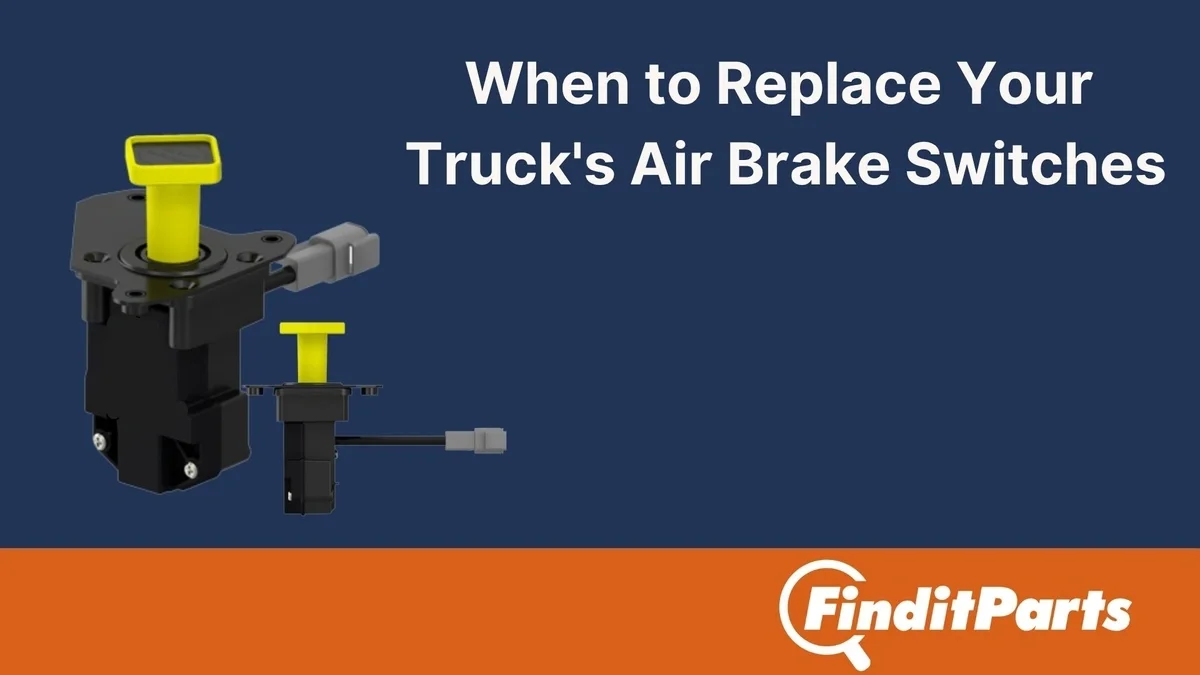
Air brake switches have one job: tell other parts of the system what’s happening with the brakes. Some trigger the brake light circuit when you push the pedal. Others help detect pressure levels and activate alerts or feed information into the ABS. All of them sit quietly until something changes, then they snap into action.
You’ll often find them near the foot valve or directly threaded into pressure lines or reservoirs. Newer trucks might have them housed inside a block or electronic module. Wherever they’re tucked, they’re watching for pressure shifts to send out signals by closing or opening a circuit. In some setups, a Bendix 5008677 Air Brake Chamber Pressure Transducer may also be involved in detecting changes, making it critical to verify related sensor performance alongside switches.
And it’s not just performance—they’re part of staying road legal too. No brake lights? You might not just be late, you might be parked by roadside enforcement. Without reliable signals from these switches, your truck could trip alerts, kill brake lights, throw off the ABS, or worse.
Signs Your Air Brake Switch Is Failing
It usually starts with something small. Maybe your brake lights flicker, or you notice one stays on even when your foot’s off the pedal. Maybe the system gives out a pressure warning that doesn’t match the gauges. These oddities can sneak in slowly, so it’s easy to brush them off—until they snowball into something that knocks the truck out of service.
Look for:
- Brake lights acting up—stuck on, won’t come on, or delayed
- Warning buzzers or lights triggered with no real issue
- Delayed or sluggish response from the air system
The August heat only makes it worse. Wires expand, plastic gets soft, and metal parts stretch. A switch that struggled in May may just quit by August. Mix in long-haul miles, stop-and-go city traffic, or any kind of tow duty, and the pressure builds across the entire brake system.
Sometimes the symptoms look electrical, so techs chase fuses or relays. But if a perfectly good circuit still acts up, chances are the switch lost its edge. That small, often-overlooked part can waste hours of shop time if nobody checks it early in the process.
How Often Should You Replace Them?
There’s no one-size-fits-all answer. Some switches last years across steady highway miles. Others quit after a few months in rough stop-start duty or salt-heavy climates. But one thing’s predictable—the longer you run them past their limit, the more likely they are to fail suddenly.
Here’s how to think about it:
- Long-haul rigs might inspect every year, especially after hot seasons
- Local fleets or mixers should look every three to six months
- Any time warning lights trigger, test the switches first
Heat, vibration, corrosion, and age all chip away at these components. The contacts inside can corrode. The spring can weaken. Small leaks from pressurized systems can creep out through failing threads. Waiting for one to completely fail often triggers other symptoms too: brake light issues, incorrect ABS readouts, unpredictable pressure readings.
Pro maintenance doesn’t mean swapping them out prematurely. But it does mean checking the function regularly and watching for patterns of failure. Swapping in a well-matched Freightliner 12-26773-000 Air Brake Pressure Switch or similar verified part can solve nagging problems faster than digging through unrelated systems.
Choosing the Right Air Brake Switch Replacement
Getting the right air brake switch isn’t just about grabbing a part that looks familiar. These things come in different pressure ratings, thread sizes, and electrical setups. Swapping in the wrong one can throw your whole brake setup out of sync.
Keep an eye on:
- Thread size and type (NPT, metric, etc.)
- Pressure range and actuation point
- Voltage compatibility
- Sensor style (normally open vs. normally closed)
- Connector type and pin layout
A plug may fit the port, but if the switch is rated incorrectly or reacts to the wrong pressure, the system won’t work as the truck expects. Always check the part number or use a VIN-tool to confirm. For example, when parking brake switches start acting up, comparing options like the PAI 450548 Parking Brake Switch and other pressure-based models gives you a clearer fix path.
One more thing—deciding between OEM and aftermarket depends more on your service habits than your brand loyalty. Just make sure performance ranks highest. If a switch can’t hold up to the daily grind, it’s only going to land you in the same place again.
Stay Ahead of Brake Switch Problems Before They Hit Hard
Brake switches don’t look like much, but they punch above their weight when it comes to system reliability. A faulty one may not snap a line or blow a valve, but it can leave a truck in the shop just the same.
Late summer’s the perfect time to give these tucked-away components a fresh look, especially with hot miles piling up and systems running hotter than usual. If something feels off, don’t wait. Knowing what to check, how often to check it, and what to swap in helps avoid surprise breakdowns that could’ve been caught early.
Keeping an eye on these switches helps avoid scrambling for parts roadside or chasing ghost codes around the shop. A small fix now beats a big one later, every time.
Downtime starts with small failures, and air systems should never be one of them. Check your fittings, connections, and sensors, and don’t wait to replace worn or slow-to-respond switches for air brake systems. At FinditParts Inc., we pay attention to the parts that keep your schedule moving and your operation safe.
Connect With Us