Need help? We're here!
(888) 312-8812 Login SignupWhat Commercial Trucks Parts Need Replacement in January
FE
FinditParts Editorial Team
December 22, 2025
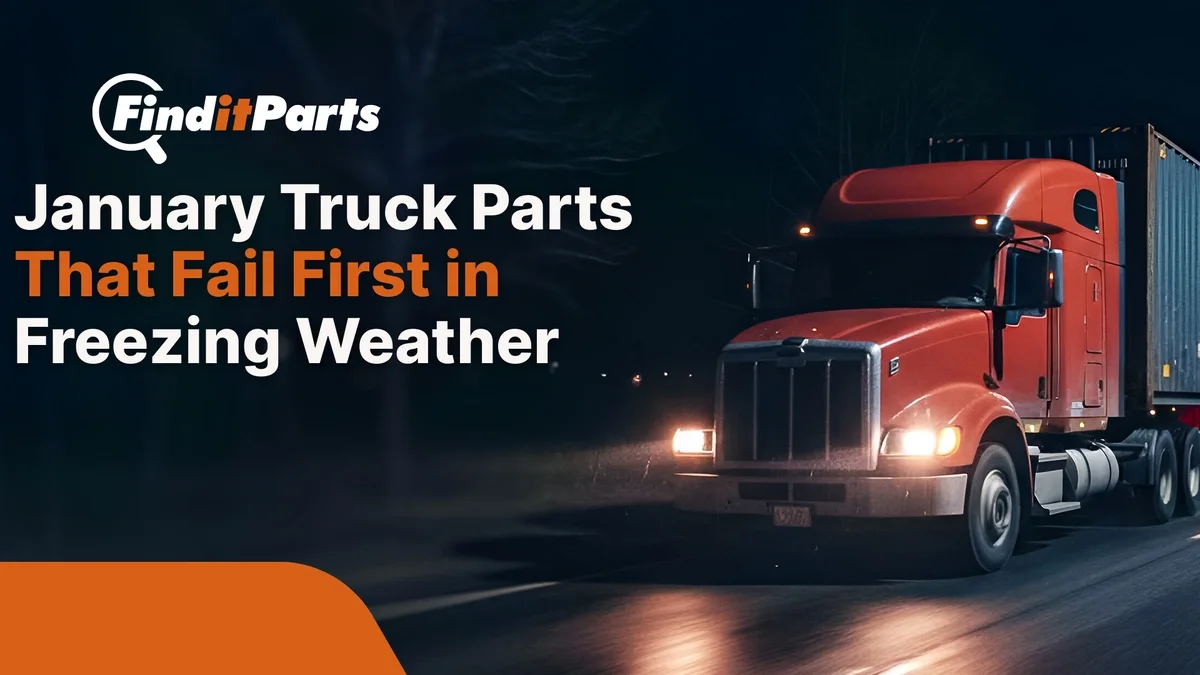
January tends to expose problems that started months ago. Commercial vehicles that powered through long hauls in December now show signs of strain. Cold mornings, wet roads, and short daylight hours only make it worse. From brake wear to blown lights, early winter stresses the parts that have already been beaten down.
Waiting until something gives out mid-shift doesn't save time or money. For those of us keeping trucks on the road, it's about spotting the common failures before they cost us hours in the bay. A look at the most overlooked commercial truck parts in January can help set the tone for a smoother winter.
Brakes That Take a Hit From Cold and Moisture
Brakes are always working hard, but winter adds a nasty mix of freezing air and road sludge. Moisture building up in the system invites rust, and salt chews through casings like a slow burn. That corrosion creeps into brake chambers and air brake spring brakes, starting with the seals and diaphragms.
One warning sign is sluggish stopping, especially after overnight parking in colder temps. Another is air loss around dual service chambers, often traced to cracks or worn housings. These aren't repairs to put off. Coming off of heavy December schedules, many rigs are on the edge. A preventive check in January can reveal smaller issues before air systems start locking up.
Lighting That Fails After Winter's First Washout
Headlights and markers pull longer hours this time of year. Short days and stormy conditions mean almost every rig is running lights through half their shift. Add road spray, ice, and constant use, and it's no wonder housings start to fail.
January is when damage shows up. A cracked seal in October might have been fine when it was dry. Now water sneaks in, freezes, expands, and wrecks the housing. Loose wires or flickering bulbs are signs it’s time for a switch before you're flagged at inspection or left without signals.
It's worth checking every turn signal, side marker, and brake light for cold weather wear. For example, a reliable replacement for a clearance light is the Truck-Lite 33275Y. It's sealed against water and stands up better to salt-stressed roads.
Broken Suspension From Overloaded Year-End Hauls
Holiday freight pushes trucks to the edge. Extra weight takes a toll, and by January the results start showing up in the suspension—especially on older units that didn’t get a pause.
Signs include uneven tire wear, sluggish ride height correction, and that loose, floating feel in the cab. Look underneath and you’ll often find shot torque rod bushings, cracked mounts, or shocks that bottom out too easily.
Cold temperatures make the bounce worse. Any rubber that’s close to failure tends to give way faster, and in some climates, the roads are rougher after those first freeze-thaw cycles. One part we often see replaced after this stretch is shock absorbers, which helps stabilize loads and smooth out steering response. If you’re checking for signs of suspension wear, don’t forget to inspect and replace shocks and struts as needed.
Fuel and Air System Trouble From Freezing Temps
Fuel systems can turn into bottlenecks quickly in winter. Cold thickens fuel, and water in the lines only makes it worse. Filters clog faster, pressure drops, and engines struggle to breathe. Add frozen valves or failing air dryers, and January becomes a mess under the hood.
A lot of common fuel issues trace back to gummy or saturated fuel filters that haven’t been changed since summer. On the air side, trap failures often show up now, especially in colder regions where dryers get no break between cycles.
Wiper and HVAC Issues That Creep In
You know it’s January when drivers start griping about frozen defrosters and chewed-up blades. Wiper systems take more abuse this time of year than most people realize. Motor strain increases, washer fluids freeze, and the blower doors? Those act up from being long ignored.
HVAC doors especially catch people off guard. Actuators get sticky, sometimes locking the system on partial defrost or hot when you need cold air. That might not seem like a big deal until your window fogs up mid-grade and you’re one gust away from zero visibility.
For wiper issues, it’s smart to look past just the arms or blades and inspect the drive itself. Some replace the whole motor assembly once it starts hesitating or slipping under cold load. HVAC-wise, replacing a faulty blend door actuator before it sticks completely is the play.
Get Ahead Before It Breaks
January doesn’t care if the schedule’s already full or if inventory’s still ramping back up. Once something snaps, you're down and behind. These common commercial truck parts—brakes, lighting, suspension, fuel and air components, HVAC systems—tend to hit their breaking point just as routes start picking up speed again.
Catching the wear early can save whole days of downtime. No one wants to be scrambling for a spring brake or crawling under a cab in freezing mud just to find out that a $30 part held things up. Swapping what’s likely to go before it does can mean a quieter, smoother entry into the first quarter. Better to take a half day for inspections than three sitting in a cold, quiet bay.
Stay ahead of midwinter breakdowns by checking the parts most likely to fail when the cold sets in. At FinditParts Inc., we make it easy to stock up on the right commercial truck parts before things go sideways, so you can spend less time waiting and more time wrenching.
Connect With Us