Need help? We're here!
(888) 312-8812 Login SignupTroubleshooting Common Brake Issues in Heavy-Duty Trucks
FE
FinditParts Editorial Team
September 04, 2025

Brake problems in heavy-duty trucks are nothing to overlook. These trucks cover long distances, carry heavy loads, and push their systems harder than the average vehicle. When the brakes aren’t working right, it’s not just inconvenient. It can be downright dangerous. Drivers and fleet managers who stay alert to brake issues are in a much better position to keep their trucks safe and on the move.
Spotting issues before they turn into serious problems keeps downtime and repair costs under control. Whether it’s strange sounds or slower stops, recognizing the signals early means there’s time to take care of them before they cause real damage. That’s why learning how to spot and handle brake problems is so important.
Recognizing Early Signs of Brake Issues
Catching brake problems early can save time, money, and safety headaches. The key is knowing what to look and listen for while the truck is on the road or before it pulls out of the lot. Ignoring small signs can lead to bigger problems later.
Common signs of brake trouble include:
- Squeaking or grinding sounds during stops
- A spongy or soft brake pedal that sinks too low
- Trouble stopping or longer than usual stopping distances
- Uneven braking or pulling to one side
- Vibration or pulsing in the brake pedal or steering wheel
Some of these indicators might seem minor, but they’re often warning signs of wear or damage. A squealing sound could mean the brake pads or shoes are worn down and need replacing. A soft pedal might point to air in the brake lines or a brake fluid leak. Letting these symptoms slide usually leads to more expensive and dangerous failures.
It’s a good practice to listen and feel for anything unusual every time a truck starts up or hits the road. Drivers should report any changes in brake behavior right away so it can get looked at and fixed before they’re back on the highway.
Diagnosing Brake Problems
Once a brake issue is suspected, inspecting the system step by step helps find out what’s wrong and where the problem is. Knowing which parts to check first makes it easier for the repair process to move quickly and correctly.
Here are some basic steps to follow when diagnosing brake problems:
- Check brake fluid levels: Low levels or dirty, dark fluid could mean a leak or contamination.
- Inspect brake lines and hoses: Look for cracking, leaking, or signs of aging that could weaken the system.
- Examine brake pads and shoes: If they’re worn thin or uneven, it’s time to replace them.
- Look at the rotors and drums: Deep grooves, warping, or heat spots shouldn't be ignored.
- Evaluate the calipers and hardware: Sticking parts or rust buildup can lead to uneven braking and faster wear.
Using a flashlight and gloves helps with getting into tight spots for a closer view. For smaller issues like light grinding or soft pedals, it might just be the pads or rotors. A full inspection means you won’t miss more complex problems, like a leaking master cylinder or a faulty caliper.
Heavy-duty trucks rely on their brakes to handle extreme pressure and heat, especially in stop-and-go traffic or mountainous terrain. Getting ahead of wear and tear is worth the time. Regular inspections, even quick ones, can stop a small issue from turning into a costly repair.
Common Brake System Issues and How to Fix Them
Brake systems in heavy-duty trucks go through a lot. Knowing some of the most common issues helps teams take quicker action and avoid unexpected breakdowns. Below are a few issues and tips for how to tackle them.
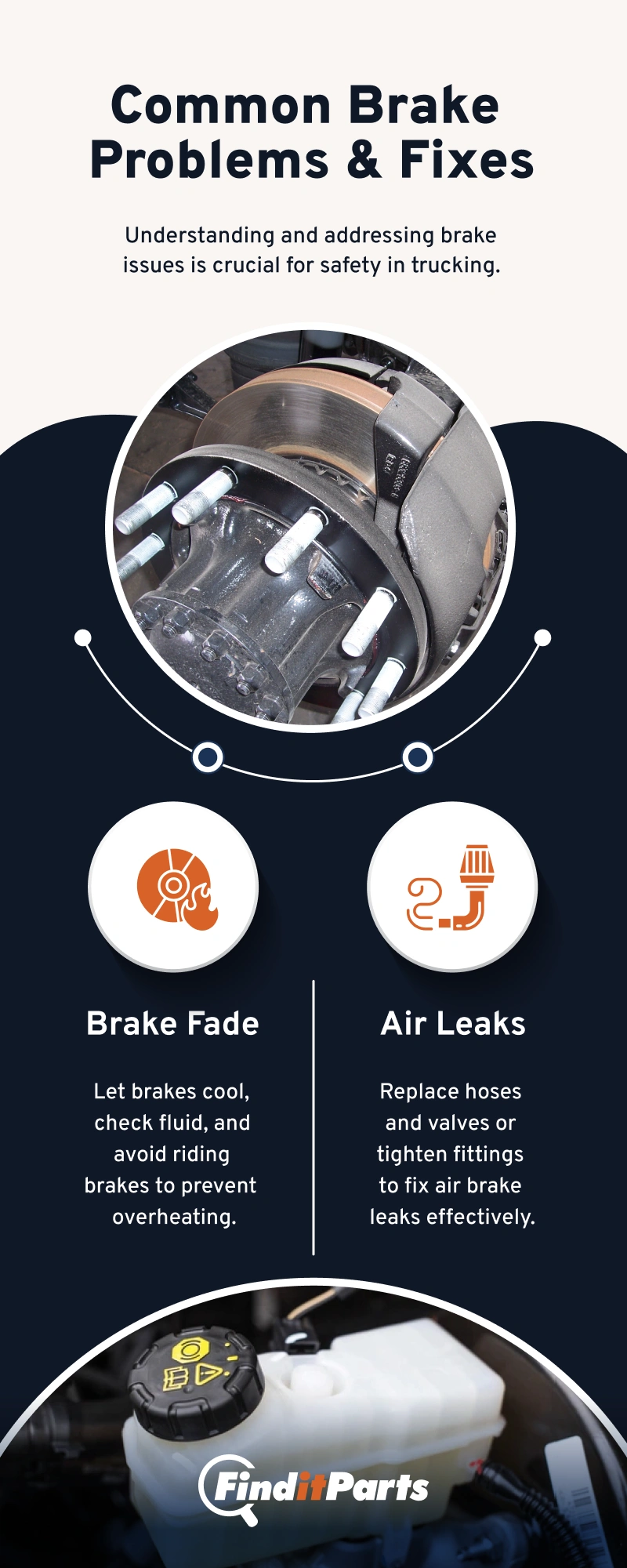
- Brake Fade: Brake fade happens when brakes overheat and lose their stopping power. This usually comes from too much braking in a short time without letting the system cool off. To fix it, allow the system to cool and check the brake fluid. It’s also helpful to avoid riding the brakes and to improve ventilation with the right setup.
- Air Brakes: Leaks in an air brake system can lead to slower stops and reduced safety. Hoses, valves, and fittings need regular checks to make sure everything stays sealed and tight. If any piece shows cracking or loosening, replacing it right away helps keep the system working properly.
- Rotor Damage: Rotors take a beating from everyday driving, especially if the brakes aren’t maintained. Warping, scoring, or cracking usually shows up as pulsing during braking or uneven stops. Sometimes rotors can be resurfaced, but often replacement is the better option. Using high-quality heavy-duty parts for trucks helps with reliability and longer life.
Each of these problems can create dangerous conditions on the road. Acting as soon as signs appear helps reduce repair costs and limits the time trucks spend off the road waiting for parts or service.
Preventative Maintenance Tips
Consistent brake maintenance plays a big role in avoiding failures down the line. Small habits and regular checks go a long way toward keeping trucks safe and running without delays.
Here are some straightforward tips to prevent brake issues in your fleet:
- Regular Inspections: Schedule brake checks that include pads, rotors, calipers, and fluid. Spotting uneven wear or low parts early means repairs can be made before bigger problems show up.
- Brake Fluid Management: Brake fluid collects moisture over time, which leads to rust inside the system. Check the fluid level and color regularly. If the fluid is dark or murky, it may need flushing.
- Proper Lubrication: Moving brake parts like sliders and pins should be well-lubricated. Without attention, they can stick, causing uneven or poor braking.
- Replace Worn Parts with Reliable Ones: When parts wear out, replace them with trusted, heavy-duty parts for trucks that stand up to tough conditions. Don’t wait until performance drops or a breakdown occurs before making a replacement.
Staying ahead of issues means your team won’t be stuck on the side of the road or scrambling for emergency repairs. Solid maintenance routines create smoother driving days and higher uptime for your fleet.
Keeping Your Fleet Safe on the Road
Keeping your fleet in motion means staying on top of brake performance. Tackling warning signs early, inspecting parts regularly, and using quality replacements all work together to make roads safer for your drivers and everyone around them.
Brake failures can snowball into major problems that slow down schedules and put trucks in the shop. But with a measured approach and a commitment to routine checks, that risk can be cut down in a big way. Whether it’s a squeaky app start or a soft pedal during a delivery run, every clue matters when it comes to keeping your trucks safe.
Encourage your team to be observant and report brake changes right away. Acting early always pays off. A reliable truck is a safer truck, and regular brake care is a key piece of the puzzle.
Keeping your fleet's brake systems in top condition is key to safety and efficiency on the road. For those looking to optimize their fleet's performance, investing in quality heavy-duty parts for trucks is a smart move. Trust FinditParts Inc. to provide a comprehensive selection of reliable components that help maintain rigorous safety standards. Explore our offerings for brakes, suspension, and steering to keep your trucks running smoothly.
Connect With Us