Need help? We're here!
(888) 312-8812 Login SignupThe Ultimate Guide to Wheel Bearing Maintenance for Semis
FE
FinditParts Editorial Team
November 19, 2025
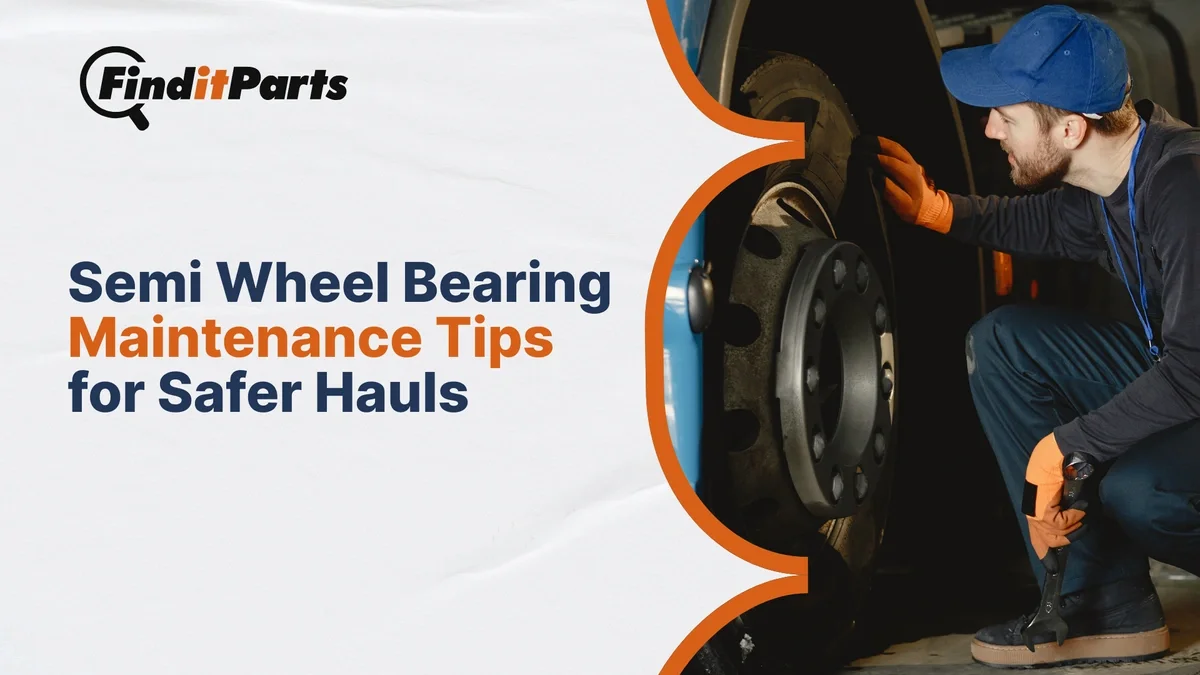
Keeping your semi’s wheel bearings in check is not just about keeping the ride smooth. It is about avoiding breakdowns, staying safe, and protecting every mile of uptime. When a wheel hub locks or overheats, it takes more than your schedule down with it. If ignored, it can ruin tires, mess with alignment, or, worse, lead to hub seizure. Wheel bearing issues tend to surface when the temperature swings, making late fall a smart time to get ahead of it.
Wheel bearings take a beating from weight, friction, and long hours under pressure. That is why semi truck wheel bearing maintenance matters just as much as brakes or engine checks. We are covering what bearings do, how to spot wear before it becomes a problem, and how to inspect, grease, adjust, and, when needed, replace them. This kind of straightforward maintenance pays off all winter long.
Understanding How Semi Wheel Bearings Work
Wheel bearings carry the full load of your truck and trailer while allowing the wheels to turn with minimal resistance. Positioned inside the hub, they support radial and axial forces as the truck moves. That pressure creates plenty of heat, making proper lubrication a must.
Most semis are built with tapered roller bearings or sealed bearings. Tapered bearings are serviceable, which means they need to be disassembled, cleaned, greased, and adjusted. Sealed bearings are replaced as a unit and do not require greasing, but when they fail, they usually fail quickly.
Wear or damage here does not just mean a noisier ride. Bad wheel bearings increase tire wear, hurt fuel economy, and can lead to failure of the wheel end. That is a safety risk and a budget problem. A good semi wheel hub inspection helps catch problems before the truck stops rolling.
We offer both OEM and high-quality aftermarket bearing kits, supporting all major truck makes and models so operators can maintain their fleet with confidence.
Tell-Tale Signs You Have a Wheel Bearing Problem
Catching early warning signs is key. Many of these show up in regular inspections or surface during other wheel-end service work. Look out for:
-
Grinding or growling from the wheels during motion
-
Excessive wheel vibration or shimmy at speed
-
Heat coming off the hub after a drive
-
Irregular tire wear or scuffing on the tread edge
If a bearing starts showing these signs, skip the wait-and-see approach. When bearings fail during winter, shrinking metal and trapped moisture can speed up the damage. Stay alert to unusual sounds or smells coming from the wheel area, especially after long cold runs.
Wheel Bearing Maintenance Best Practices
Preventing bearing failure starts with consistent, proper maintenance. For trucks running medium to long hauls, inspection and service should happen every 100,000 miles or in sync with brake inspections.
Here is what that service should include:
-
Cleaning the old grease off the bearing and inspecting for pitting or scoring
-
Repacking with high-quality grease built for heavy-duty mileage
-
Adjusting the preload to spec so the bearing is tight, but not too tight
-
Checking the hub seals for damage or leaks
Late fall is the smart window to get this handled. Once the snow starts falling and road salt hits the pavement, it is much harder and colder to deal with hub disassembly.
When to Replace and What to Replace With
There is a point where repacking is not enough. If you see visible scoring, heat discoloration, or feel excessive play when the wheel is lifted and tugged, it is time to replace, not just service.
Always choose the right replacements. OEM-grade and tested aftermarket bearing kits offer the reliability you need. Keeping spares on hand can shorten downtime when a wheel end starts to go. For example, matching heavy-duty bearing assemblies like this option from Meritor, gives you peace of mind when time and fit matter.
Seals matter too. A worn-out seal allows water, salt, or grime to enter the bearing cavity. Use high-quality wheel bearing seals that match both your axle rating and hub style for protection and long life.
With our vast inventory of over one million parts, fleet managers have convenient access to needed replacements and related tools all in one place.
The Role of Hub Maintenance Tools and Grease in Bearing Health
Maintaining bearings properly means using the right tools. A proper seal puller helps you avoid gouging the hub or leaving debris behind. A bearing packer lets you grease quickly without air pockets, and a torque wrench is a must to get specs correct without going too far.
When it comes to grease, your choice makes or breaks the rebuild. Trucks running in December and February need a high-temp, water-resistant wheel bearing grease that does not separate or thin out in cold conditions. That starts with a trusted brand like Timken. You can source application-specific grease or seal kits that match up to your axle setup.
Grease should always be packed into the bearing cavity by hand or with a packer, coating both the rollers and races. No shortcuts here. The wrong grease, or too little of it, will undo all your work in one hot haul.
We offer rapid shipping across the United States, helping you minimize downtime and avoid lengthy waits for essential wheel-end components.
Stay ahead of winter wheel bearing issues with FinditParts Inc. and keep your fleet moving with confidence. For everything from wheel-end components to seasonal maintenance tools, our inventory has you covered. Explore our full range of heavy truck parts to equip your rig for the road ahead and maximize your uptime this season. Let us help you maintain safety, reliability, and peace of mind mile after mile.
Connect With Us