Need help? We're here!
(888) 312-8812 Login SignupEverything You Need to Know About DPF Systems
FE
FinditParts Editorial Team
November 12, 2025
Introduction
If your rig runs on diesel, then you have a Diesel Particulate Filter watching your back. The DPF system plays a major role in keeping your truck within emissions rules, but it does not just sit quietly under the hood. When it stops working, you will feel it with reduced engine performance, fuel waste, and warning lights that will not turn off. Good DPF maintenance is one of those things that flies under the radar until a clogged filter lands you in the shop instead of on the road. Whether you are working with your own truck or managing a hundred, knowing how DPF systems work helps you save time, money, and stress. Here is a straightforward look at what they do, how to keep them clean, when to replace them, and the rules that go with the territory.
What a DPF Does and Why It Matters
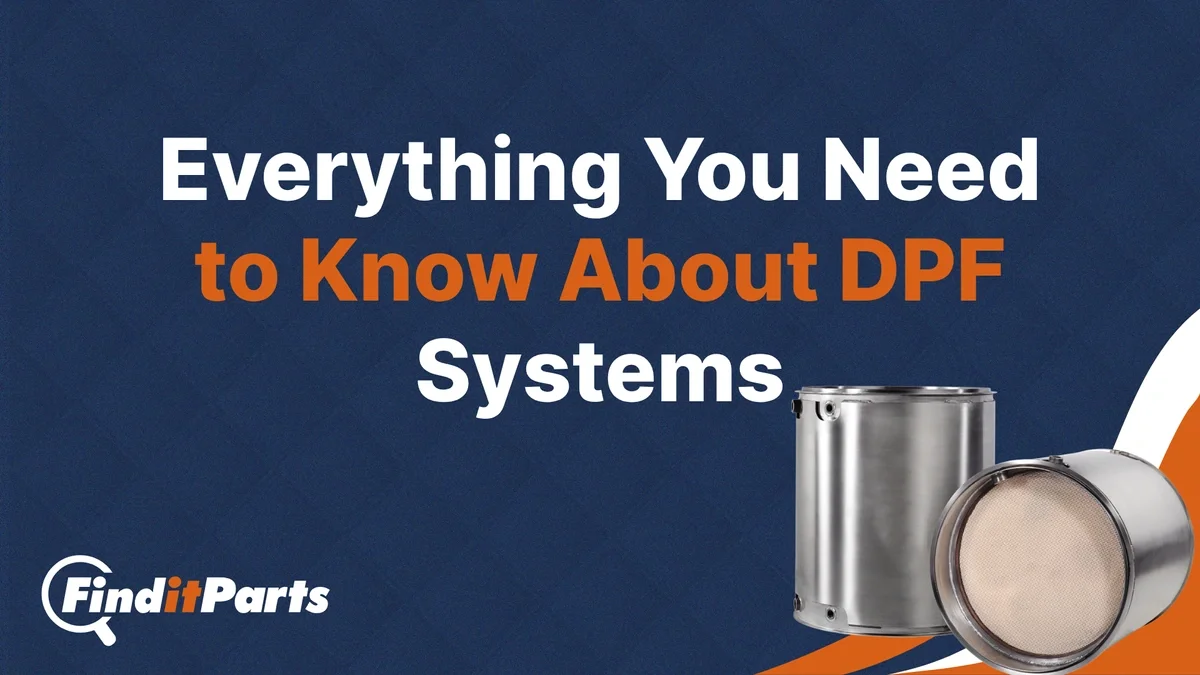
The job of a DPF is simple: trap harmful soot and tiny particles before they exit through the tailpipe. That soot forms during combustion. Without the filter, heavy-duty diesel engines would send it straight into the air. Instead, the DPF locks the particles in a filter made of cordierite, silicon carbide, or something similar.
DPFs are deeply tied to emissions compliance. If the system is clogged, you will not just miss a regulation target. Your truck may lose power, idle rough, or trigger forced regeneration. Fuel usage can increase. If ignored too long, the repair can disrupt your schedule and cost you more.
Typical signs of DPF trouble include:
• A flashing or solid DPF dashboard light
• Sluggish acceleration or reduced torque
• Increased exhaust temperatures
• Failed regen cycles
If your warning system shows frequent regen attempts or you notice rising pressure across the filter, it is probably time to check for a clog.
A DPF that is functioning properly captures dangerous emissions and stores them until they can be safely burned off. In modern diesel vehicles, the DPF is a cornerstone of meeting environmental standards, which makes maintaining it not just a technical requirement but a key part of your daily operating routine.
DPF Cleaning: When, Why, and How
DPF cleaning is not optional. There are three forms of regeneration: passive, active, and forced. Passive happens on the road when conditions are right. Long-haul trucks at steady highway speeds often get this naturally. Active starts when the ECU decides a regen is needed and injects extra fuel to burn soot. If both systems fail or never activate, you are left with forced regen, a manual process completed in a shop.
When soot builds faster than it can burn off or ash clogs the walls of the filter, cleaning is required. Shops typically use one of three proven methods:
1. Thermal cleaning, where controlled heat burns off soot
2. Air-blast cleaning, which pushes ash out using compressed air
3. Ultrasonic cleaning, which uses sound waves and liquid suspension
Professional cleaning is the only way to fully remove stubborn soot and built-up ash. Most shops recommend scheduling a full DPF cleaning between 100,000 and 200,000 miles, depending on your application and the engine’s duty cycle.
If you skip this too long, you risk melted filters, cracked substrates, and emergency replacements.
Regular inspection of DPF sensors and connectors helps identify cleaning needs before they impact performance. Many drivers and fleet managers mark DPF cleaning intervals alongside major maintenance events to stay ahead of buildup and reduce surprise repairs.
DPF Replacement: What You Need to Know
At some point, every DPF will need to be replaced. Repeated clogging, melted filters, internal cracking, or failed regen cycles are signs it might be done for good. If cleaning does not restore performance, replacement is probably your next step.
When choosing a new filter, stick with known brands and make sure the part is built for your exact engine and model. That includes matching engine certification and type of emissions system.
Always follow all installation instructions and pair it with a working DPF differential pressure sensor to monitor buildup moving forward.
It helps to consult your owner's manual or a qualified service tech to confirm correct fitment. Using the wrong DPF may cause compliance failures or shortened part life. Frequent replacement of gaskets, clamps, and sensors at the same time as the DPF can prevent leaks and follow-up issues.
Staying Compliant: Federal and State-Level DPF Regulations
DPF systems are about more than cleaner air. They are part of strict emissions rules from the EPA and, for some states, CARB. Most heavy-duty trucks on the road today fall into one of several EPA emissions tiers based on model year and engine certification.
California’s rules are even stricter. If you drive in that state, the California Air Resources Board (CARB) can require specific retrofit systems, truck labeling, and record-keeping for compliance. That applies to fleets and owner-operators.
Keep your DPF system in top condition with quality commercial truck parts. At FinditParts Inc., we offer everything you need to maintain your fleet's performance and compliance. Explore our extensive selection of commercial truck parts to ensure your diesel engines run smoothly and efficiently on every trip. Stay ahead of potential issues by investing in the right parts today.
Connect With Us

Related Articles

How You Can Be Prepared For Brake Safety Week: A Simple Guide
April 01, 2026
Freightliner Cascadia Brake Pad Specifications & Fitment Guide: Complete Technical Reference
March 30, 2026
Freightliner Cascadia 2012-2019 Brake Maintenance Schedule & Inspection Guide: Keep Your Brakes Safe and Reliable
March 19, 2026